 MINDBODY
By: Jess Appel, ACSM Certified Master Level Personal Trainer, CrossFit Level 1 Trainer
The scale lies. Okay, it doesn’t technically lie. It is giving you an accurate representation of what your body weighs. However, our own understanding or interpretation of that information is flawed. The number we check day after day is often a poor indication of health or real body transformation. The scale can lead to a lot of unnecessary stress and disappointment as you watch it fluctuate. I don’t know about you, but anything that causes me stress is no friend of mine! Check out the top reasons the scale is not your friend and what tools you can trust to measure progress instead.
Three Reasons the Scale is Not Reliable
The Scale Can’t Tell the Difference Between Fat and Muscle
Scales are simple machines. They are only capable of providing your total body weight. That number includes everything. Muscle, fat, and a handful of other factors. Unfortunately, it’s not able to discern the difference between fat and muscle. Most scale watchers assume a lower number is a better number. They don’t realize a lower weight may be due to influences besides fat loss. For instance, if you’ve been eating at a significant caloric deficit, your loss may be attributed to muscle loss.
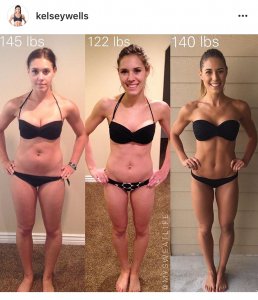
If you have been lifting heavy and building muscle mass, an increase in weight may actually reflect a gain in lean muscle tissue. Oftentimes, more weight equals looking and feeling much better! Take it from famous blogger and Instagram fitness influencer Kelsey Wells, who, during her transformation, lost and then regained weight to look and feel her best.
The Scale is Affected by Water
Your weight is constantly fluctuating throughout the day. From morning to night, the scale can easily fluctuate by 5 pounds or more. But why? You’re clearly not gaining fat that quickly. The answer is water. Water levels rise and fall in your body constantly and for a number of reasons.
- Fluid Balance – Your fluid balance directly impacts the number on the scale. Drink a big glass of water, up 1 lb. Use the restroom. Back down. However, it’s not as simple as fluid in, fluid out. Being even mildly dehydrated can cause the body to retain excess fluid, which makes the scale creep up as well.
- Hormones – Ya feel me, ladies? I know you do. Interestingly, it’s not just those “time of the month” hormones that impact water levels in the body. Stress, which increases Cortisol levels (also known as the stress hormone), can lead to an increase in visceral abdominal fat but it can also cause weight gain due to water retention.
- Carbs – Every delicious carb you eat is stored in the body with glycogen. Each gram of glycogen has water stored right along with it. So, if you hit the carbs heavy on a cheat day, you can guarantee the scale is going to tick up with each gram of carbohydrate you consume.
The Scale is Affected by Your Microbiome.
Micro-what? Your microbiome is defined as the trillions of bacteria living inside you. The diversity of this Universe can have a direct and significant impact on your health and weight. People with weaker and less diverse microbiomes have less efficient digestion and elimination. Slower elimination means more retained weight. Additionally, a less than stellar bacteria population can lead to leaky gut syndrome. The body responds to leaky gut syndrome with a marked increase in inflammation, which the scale registers as excess weight.
How You Can Measure Your Progress
So what tools can you rely on to accurately and effectively measure real progress towards health? There are quite a few options available.
InBody Composition Testing
The most accurate way to measure progress towards a body transformation is by tracking body composition. The InBody is a non-invasive composition test that will give you a detailed percentage of your muscle, fat, and water—all in under a minute! By tracking these numbers, you can get an accurate assessment of your health and progress. Click here to book an InBody Composition test with one of our Personal Trainers!
Take Measurements
Taking body measurements is a great way to keep tabs on how your entire body is changing shape. It’s simple, inexpensive, and can be done in the privacy of your home.
Track Other Health Markers
Consider tracking additional health markers like heart rate (but not by subtracting 220 minus your age), fasting insulin levels, and C-Reactive protein levels. This information can give you a more complete vision of what is changing for the better in your body.
 Jess Appel is excited by fitness because of its ability to truly transform lives. Carefully building a physically strong, well-fed body changes the way you feel and interact with the world. After 15 years in the fitness industry, Jess has witnessed and directed a multitude of physical transformations and is an expert at helping clientele break through plateaus.



Oh, I agree with this. That’s why IBM should be the one assessed and not just body weight.